Libya’s Currency Crisis: Governance Failure, Letters of Credit, and the Limits of Exchange-Rate Reform
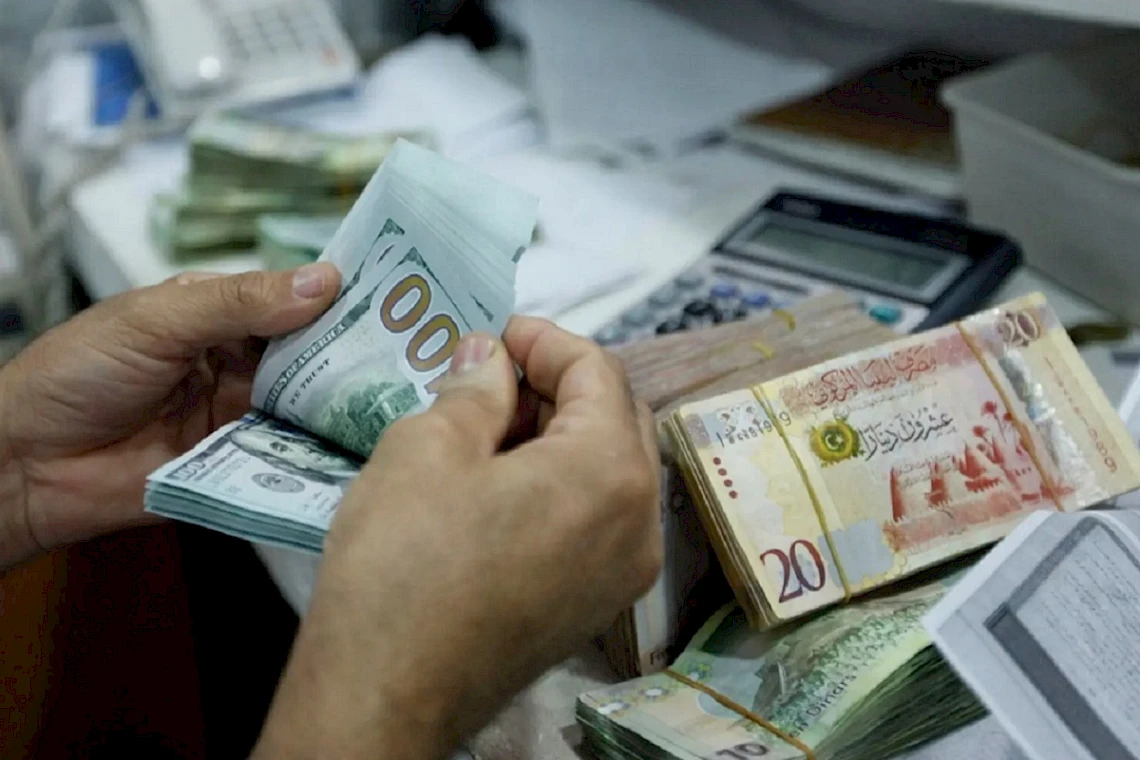

Libya's dinar crisis is often discussed as if it were primarily a question of finding the correct exchange rate. That diagnosis is too narrow. The repeated weakening of the currency reflects a deeper problem: a fragmented system of public finance and foreign-exchange allocation in which monetary policy is asked to compensate for failures of governance.
Letters of credit (LCs) have become central to that problem. In an oil-dependent economy that imports much of what it consumes, access to foreign currency is economically indispensable. But when very large volumes of foreign exchange are channeled through an LC-centered system while the official and parallel exchange rates diverge, the mechanism can create powerful incentives for excessive demand, over-invoicing, rent-seeking and arbitrage. The policy question is therefore no longer only how to administer LCs more efficiently. Libya should also ask whether continuing to rely so heavily on this mechanism is compatible with lasting currency stability.
This article draws on the author's ongoing, unpublished academic research on the political economy of Libya's currency crisis and updates that analysis with newly available 2026 data on foreign-exchange use and letters of credit. The research provides the analytical framework; specific factual claims and numerical evidence in this article are attributed to the underlying published or official sources.
A Governance Crisis Expressed Through the Exchange Rate
Since 2011, Libya has experienced repeated currency instability, liquidity shortages, devaluations and a persistent parallel market for foreign exchange. Conventional explanations emphasize fiscal deficits, monetary expansion, oil-price volatility and external imbalances. These factors matter, but they operate through institutions.
After the political division that intensified in 2014, competing fiscal and monetary structures weakened policy coordination and credibility. Available evidence cited in the author's research shows that foreign-exchange holdings fell from about US$105 billion in 2013 to roughly US$70 billion by early 2015, while the dinar lost around one-third of its value. Fragmented authority also made it harder to impose a unified budget, coordinate public spending and establish credible expectations about the future supply of foreign currency.
This is why the exchange rate should not be treated merely as a technical price. In Libya it is also distributive: it determines who can obtain dollars generated by oil revenues, at what price, and through which institutional channel.
Why Letters of Credit Matter
The LC system sits directly at the intersection of Libya's oil revenues, its import dependence and the official exchange rate. In the years before the 2021 exchange-rate unification, the official rate remained around 1.3-1.4 LYD per US dollar while the parallel-market rate at times traded at several multiples of that level. Such a gap created an unusually valuable economic privilege for actors able to obtain foreign currency at the official rate.
The historical evidence illustrates the scale. Global Witness reported that nearly US$2.5 billion in LCs were issued in only 13 weeks between April and July 2020. During that period, approved LCs for meat exceeded the entire annual value of meat exports to Libya in each of 2016, 2017 and 2018. The same investigation described a US$110 million LC intended for power generators that was reportedly redirected to an unrelated company before payments were stopped on suspicion of corruption.
These cases do not mean that every LC is fraudulent. They do, however, demonstrate why an LC system operating alongside a large exchange-rate differential can become a vehicle for extracting the value of subsidized foreign currency. Over-invoicing, fictitious imports, diversion of imported goods and resale at prices reflecting the parallel rate can transform an instrument of trade finance into a channel for arbitrage.
The 2026 Data Make the Question More Urgent
The most recent figures show that LCs remain one of the largest channels through which Libya's foreign currency is distributed. According to Central Bank of Libya statistics for January through July 2026, commercial banks used US$15.987 billion in foreign exchange. Approximately US$8.3 billion — about 52 percent of the total — was used through letters of credit. Personal foreign exchange use accounted for about US$5.3 billion, while remittances accounted for roughly US$2.3 billion.
The scale matters. The CBL also reported that about 2,763 private-sector companies and factories had foreign-currency requests approved through commercial banks for LCs and other transfers during the first seven months of 2026. In July, while reviewing developments in the parallel market exchange rate and measures to contain growing foreign-exchange demand, the CBL announced another US$1 billion allocation to finance letters of credit, alongside US$1 billion for personal foreign-exchange transactions.
The figures do not prove that US$8.3 billion of LC financing was unnecessary or improperly used. But they do establish something important for policy: Libya is allocating an enormous share of its foreign currency through this mechanism. When the dinar remains under pressure and a substantial official-parallel exchange-rate gap persists, the burden of proof should no longer rest only on critics of the LC system. Policymakers should demonstrate that the volume of foreign exchange allocated through LCs corresponds to genuine import needs and produces commensurate economic value.
Why Devaluation Alone Is Not Enough
Libya has repeatedly tried to reduce the official-parallel gap through exchange-rate measures. The 2018 foreign-exchange fee was initially set at 183 percent on most foreign-currency sales. In December 2020, the authorities approved a formal devaluation of roughly 70 percent, moving the official rate from around 1.4 to 4.48 LYD per dollar from January 2021. These measures substantially reduced an extreme exchange-rate differential.
But price adjustment does not resolve the institutional source of demand. A devaluation changes how many dinars are required to obtain a dollar; it does not by itself determine whether import values are genuine, whether the goods actually enter Libya, whether the quantity requested is economically justified, or whether politically connected actors enjoy disproportionate access.
This is the central limitation of treating currency instability as a problem that can be solved by periodically raising the official dollar rate. If the mechanisms generating excessive or distorted demand for foreign currency remain intact, a new parallel-market premium can eventually emerge around the new official rate.
Libya Should Reconsider the LC-Centered Allocation Model
The appropriate response should go beyond tightening paperwork around individual LCs. Libya needs to reconsider the architecture through which oil-generated foreign exchange is allocated to imports.
One option is a transparent import budget — an annual or periodic foreign-exchange framework based on realistic estimates of the country's import requirements, available oil revenues and reserve objectives. Such a framework would establish aggregate ceilings and sectoral priorities before foreign currency is distributed, rather than allowing the volume of approved demand to become the de facto import policy.
This should be accompanied by systematic verification. Import values can be cross-checked against customs data, international trade databases, historical unit prices, tax records and physical evidence that goods entered the country. Beneficial ownership should be transparent, related companies should be identified as economic groups rather than treated as unrelated applicants, and unusually large deviations from historical import patterns should trigger enhanced review.
The objective is not to suppress legitimate trade. Libya's private sector needs reliable access to foreign exchange, and import restrictions that create shortages would simply push more demand into the parallel market. The objective is to replace a system that can reward access to subsidised dollars with one in which foreign-exchange allocation is tied more closely to verified economic activity and the country's actual capacity to finance imports.
Currency Stability Requires Governance Reform
The dinar will not be stabilized sustainably by monetary policy alone. A credible strategy requires a unified national budget, coordination between fiscal and monetary authorities, disciplined public expenditure, transparent management of oil revenues, and stronger oversight of the channels through which foreign exchange leaves the country.
The 2026 data make this argument more immediate. When more than US$8 billion can move through letters of credit in seven months, the governance of that mechanism is not a secondary banking issue. It is a core component of Libya's exchange-rate policy.
Libya therefore faces a choice. It can continue periodically adjusting the official exchange rate while attempting to manage the consequences of a foreign-exchange allocation system that generates persistent pressure and opportunities for arbitrage. Or it can address the institutional architecture that determines demand for, access to and use of the country's oil-generated dollars.
Exchange-rate reform without governance reform cannot sustainably stabilize the Libyan Dinar.
Sources
Central Bank of Libya. Commercial banks' uses of foreign exchange, 1 January-31 July 2026.
Central Bank of Libya. Governor's meeting on exchange-rate stability and foreign-currency availability, 26 July 2026.
Global Witness (2021). Investigation into fraudulent use of Libyan letters of credit.
Eaton, T. (2018). Libya's War Economy: Predation, Profiteering and State Weakness. Chatham House.
World Bank (2020/2021). Libya private-sector and economic-monitor research.
International Monetary Fund (2024). Libya: Selected Issues.
Featured
All reports