- Central bank data show annual inflation at 13.6% and the dinar down 15.6% since January, while deposits, credit and development spending all shrank in the second quarter.
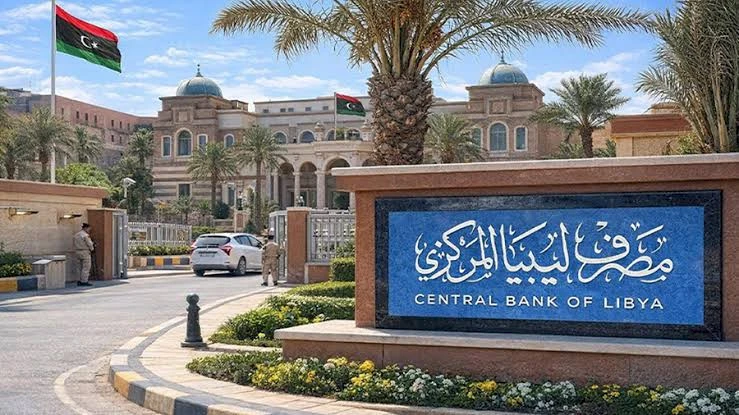
Libya’s public finances are being carried by higher oil prices, but the latest economic bulletin from the Central Bank of Libya (CBL) shows growing pressure on prices, the currency and the banking system. The bulletin covers the second quarter of 2026.
Annual inflation reached 13.6% in the second quarter, 8.6 points higher than in the first. The rise was broad. Clothing and footwear prices climbed 26.6%, furniture and household equipment 18.9%, restaurants and hotels 17.5%, and food and beverages 16.8%. Transport and health both rose by more than 12%. Prices that are set administratively or subsidised held up better: housing, water, electricity and fuel rose by only 6.9%, and education by 2.3%. Because the largest increases were in goods that Libya can import, the figures point to a weaker exchange rate feeding through into domestic prices.
That weakness is plain in the official rate. The dinar ended June at about 6.41 to the dollar, compared with roughly 5.42 at the end of 2025. That is a depreciation of about 15.6% in six months.
A shift towards cash
Broad money fell by 3.8% during the quarter to LD208.6bn, after growing strongly in the first three months. The total hides a change in how money is held. Currency in circulation outside the banks rose by 10.2% to LD77.6bn, about 31% above its end-2025 level. Demand deposits fell by 10.7% to LD127.3bn. Cash now makes up about 38% of narrow money. The monetary base shrank by 9.5% to LD142.5bn, mainly because commercial banks’ deposits at the CBL dropped from LD84.6bn to LD63.2bn.
The banking system’s net foreign assets fell by 6.1% over the quarter to LD567.4bn, of which LD542.6bn sits with the central bank. They remain 12.6% above their end-2025 level, though part of that gain comes from revaluation as the dinar weakened. Net claims on the public treasury fell by 3.5%.
Deposits at commercial banks fell by 5.6% to LD189.8bn. Households drew down the most: their deposits dropped by 8.8% to LD56.6bn. Public-sector deposits fell by 6.3% and corporate deposits by 5.2%. Government deposits were the only category to grow, rising 3.1% to LD24.6bn.
Lending fell at a similar pace. Outstanding credit from commercial banks fell by 3.1% in the quarter to LD31.8bn, and is down 5.9% since the end of 2025. Most of the fall came from murabaha loans to individuals, which make up about half the loan book and dropped 4.7% to LD16bn. Credit to productive and service activities fell by 2.2% to LD12.4bn, while property finance edged up 1.4% to LD3.3bn. The loan-to-deposit ratio is just 16.7%, which shows how little the banks do to channel savings into private economic activity.
Prices, not volumes
Crude output reached 245.8mn barrels in the first half of 2026, about 1.4mn barrels a day and close to the 2025 average. Exports totalled 216.5mn barrels, or 1.2mn b/d. The average selling price of Libyan crude rose to about $94.5 a barrel from $68.3 in 2025, an increase of nearly 38%. Prices for the country’s seven grades ranged from $92.2 for Sarir to $96.9 for Abu Attifel. The extra revenue therefore comes almost entirely from higher prices rather than from any increase in production capacity.
That windfall shows up in the budget. The state ran a surplus of LD24.3bn in the first half, with revenue of LD74.2bn and expenditure of LD49.9bn. Oil supplied 97.9% of revenue, or LD72.6bn. Non-oil revenue was only LD1.6bn, partly because there was no fee on foreign-currency sales, which raised LD12bn in 2025.
Spending remains mostly current spending. Salaries took LD36.1bn, or 72.3% of the total, and subsidies LD10bn, or 20.1%. Operating costs came to LD3.7bn. Development spending was just LD146.7mn, or 0.3% of the total, compared with LD20bn for the whole of 2025. Within subsidies, the child allowance was the largest item at LD3.3bn, followed by electricity and public lighting at LD1.9bn and medicines at LD0.9bn. Nothing was spent on fuel subsidies during the period.
External accounts
Trade data for 2025 show exports up 10.7% to LD172.6bn, while imports grew faster, by 21.4%, to LD150.3bn. Europe remains the main market. Italy took 20.7% of exports, worth LD35.8bn, followed by Germany at LD31.1bn and Spain at LD14.3bn. On the import side, the UAE was the largest supplier with a 17.5% share worth LD26.3bn, followed by China (LD21.4bn), Turkey (LD16.7bn) and Egypt (LD12.9bn). Imports from both the UAE and Egypt rose by about 35%, and imports from Cyprus nearly doubled.
Preliminary balance-of-payments figures for 2025 show an overall deficit of LD34.8bn, despite a trade surplus of LD38.7bn. The cause was a current-account deficit of LD30.2bn, driven by net outflows on services, income and transfers, together with a LD18.3bn deficit on the capital and financial account.
Outlook
Taken together, the second-quarter data describe an economy whose finances depend on a favourable oil-price cycle while the currency, prices and banking system come under growing pressure. The fiscal surplus rests almost entirely on oil revenue. Spending is dominated by salaries and subsidies, and investment spending has nearly stopped. At the same time, inflation has reached double digits, deposits and credit are shrinking, and demand for cash outside the banks is rising. How the economy performs in the coming quarters will depend on the path of oil prices, whether production stays stable, and whether monetary policy can contain inflation.
Source: Central Bank of Libya, Research and Statistics Department, Economic Bulletin, Q2 2026.